Wednesday, May 10, 2023

The WGA strike...


As of last week, the Writers' Guild of America (WGA) has been on strike. Shows still in production can continue with completed scripts, but there are showrunners who are members of the WGA, and some of those showrunners have stopped working altogether on their programs.

I remember 2007, the last time writers went on strike. "24" lost basically an entire year (although this seemed to work out well, as the delayed season -- number 7 -- ended up with a strong and coherent plot, possibly because the writers had close to an extra year to plan things out, rather than making it up on the fly).

Back then, streaming had not taken off, so the only "on demand" viewing was via DVDs (of older shows/seasons) or TiVo of currently airing shows. Between network and cable TV, I had a full plate of TV watching, so much so that I would sit down with the fall TV preview issue of Entertainment Weekly and plot out a grid of days and time slots to see if there were any conflicts between shows. (Yes, my original TiVo could only record one channel at a time -- the horror!)

As you can imagine (given the theme of this blog), the writers' strike left me feeling despair at the time. What would I do for entertainment?!? Reality TV (whose writing staff has a different guild) could only go so far.

Today? I kind of understand the issues involved and I certainly hope the writers can negotiate a fair deal to take into account the new economics of streaming and on demand viewing, but I don't feel anything like the existential dread that I felt 16 years ago.

The only scripted network shows that I've been TiVoing this season are NBC's "The Blacklist" and CW's "Kung Fu." (I also watched "Magnum PI" but failed to set my TiVo to record it after it moved from CBS to NBC, so I'll have to catch up on that.) "The Blacklist" is in its final season, and "Kung Fu" might not be renewed. And I got rid of cable years ago. That leaves the streaming services, where I have Amazon Prime and Disney+. The strike will definitely impact me there, but the fact of the matter is that between what's already on those streaming services*, plus a whole bunch of C-dramas available on YouTube (I just started an interesting looking one called "Stealth Walker" about an undercover female narcotics agent), and DVDs**, I'm not going to run out of things to watch for a long time.

* Season 4 of Amazon's "Jack Ryan" starts next month! And there's "Citadel," which cost something like $50 million per episode...

** I rewatched "Prison Break" earlier this year, and am just over halfway through with "Justified" right now. "Battlestar Galactica" and "24" await their turns.


Tuesday, April 11, 2023

Revisiting 90s TV: "Nowhere Man"

This was a weird, one-season show about Thomas Veil, a photographer who's just been critically lauded for a powerful picture he took that he called "Hidden Agenda," which seems to show three men being hanged. He attends a celebration in his honor with his wife, and then goes to dinner with her. When he comes back from the restroom, she's gone. He goes home and sees her there...with another man. When he tries to get inside, she doesn't seem to recognize him. What??? She's not the only one. As he soon discovers, no one seems to know who he is.

Played by Bruce Greenwood (Captain Pike in the rebooted "Star Trek" movies), Veil goes on the run, trying to unravel the mystery of who erased his life. Of course, there is a shadowy cabal behind this all, and he manages to stay barely one step ahead while making slow progress toward finding out what happened.

Like the best of these shows, every mystery is solved only temporarily, with more mysteries emerging. Paranoia is rampant through every episode, as Veil has no idea who he can trust and who is secretly working for his antagonists.

The risk for these kinds of shows is that the writers have a high concept to start with, but no idea how to wrap it up (ahem, "Lost"...). "Nowhere Man" lasted only one season, but news of its cancellation came with enough lead time that the show has a definitive series finale that satisfactorily explains everything.

Definitely worth checking out if you like this kind of paranoia-driven serialized drama.

Tuesday, March 28, 2023

Revisiting 90s TV: "The Pretender"


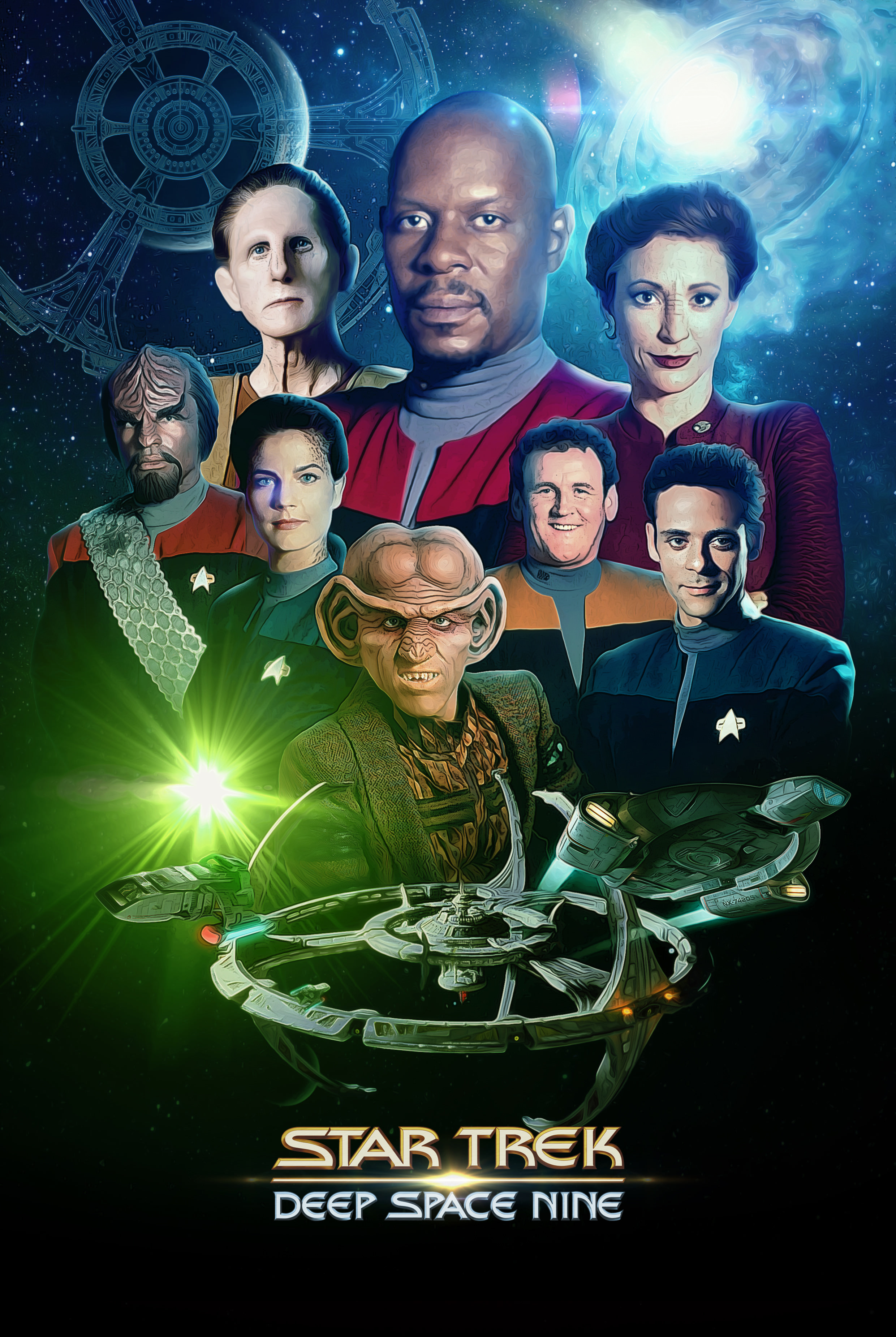
Although I watched TV before the 90s and have some nostalgia for TV shows that aired before then, my love of TV didn't really start until the early 90s. And I still think of that decade as having been a peak time for TV dramas. The X-Files, of course, was my favorite show from back then, but there was also Star Trek: Deep Space Nine (the best Trek series, in my opinion), La Femme Nikita (a precursor to 24), Hercules: The Legendary Journeys, and Xena: Warrior Princess.

One of the lesser known shows from the time was The Pretender, which I've rediscovered on Amazon Prime. I actually have the entire series on DVD, but my home gym has no DVD player, so I'm dependent on streaming (or over-the-air during football season).

The premise of the show is that a shadowy corporation known as the Centre (note the British spelling) captured a young boy named Jarod in the early 60s. Jarod is a genius who can literally master any profession or skill almost instantly. The Centre exploited him for decades by making him perform simulations, whose outcomes the Centre would sell to the highest bidder. Some of these were military simulations, and the Centre was happy to sell to foreign governments. (Along the way, Jarod also figured out how to save the Apollo 13 astronauts, and determined that Lee Harvey Oswald could not have fired all of the shots on Dec. 22, 1963.) One day, Jarod escapes.

The formula of each episode is that Jarod finds someone who has been wronged, and using his Pretender skills, he assumes an identity that is "helpful" to the perpetrator, who he then sets up and exposes. In this way, the show was similar to The Fugitive or The A-Team or any number of past shows where the protagonist goes from town to town. One key difference, however, is that Jarod, while the hero of the show, is a pretty dark character. He seems to delight in inflicting poetic justice on the villains, psychologically tormenting them by making them feel what their victims felt. "How does it feel, seeing nothing but water in every direction, and wondering what just bumped your feet down below?" he snarls at one of his targets, who left a man to drown, and who Jarod has dumped into the ocean from shore.

Besides the weekly revenge story, there is a continuing storyline involving the Centre, which naturally wants Jarod back. Assigned to catch him are the team of Miss Parker (no first name is ever given), Sydney (no last name is ever given), and Broots. Sydney is the psychologist who worked with Jarod from his childhood days, and who doesn't want Jarod harmed and sincerely thinks the Centre is the best place for him. Miss Parker is like Emma Peel in style but just wants to catch Jarod alive, preferably, but dead is okay, so she can get back to her career in the corporate division. Broots is the tech nerd.

Meanwhile, Jarod knows nothing of his past; his parents supposedly died in a plane crash, but he comes to doubt that. The Centre holds secrets, and he keeps trying to unearth them.

As the show went on, the backstory of the Centre became more and more complicated, with Miss Parker's father (Mr. Parker), her deranged half-brother Mr. Lyle, the emphysema-suffering Mr. Raines, and more joining the cast.

Coming up on 30 years old, this show still holds up pretty well by today's standards. It ended in a cliffhanger and then was canceled. That cliffhanger was resolved by a 2001 TV movie on TNT, but then TNT aired a second TV movie that also ended on a quasi-cliffhanger, and that was the last anyone ever saw of the show...

On a related note, I once met the star, Michael T. Weiss. Of all of my celebrity encounters, this was one of the very few that did not take place in L.A. Instead, it was at O'Hare Airport, in the line waiting for a taxi in the mid-2000s. He was with a friend, so I didn't want to be an obnoxious fan, but when there was an opportune moment, I turned to him and said I really enjoyed his work in The Pretender.


Saturday, March 18, 2023

Why I think the "Mission: Impossible" movies are better than the James Bond ones


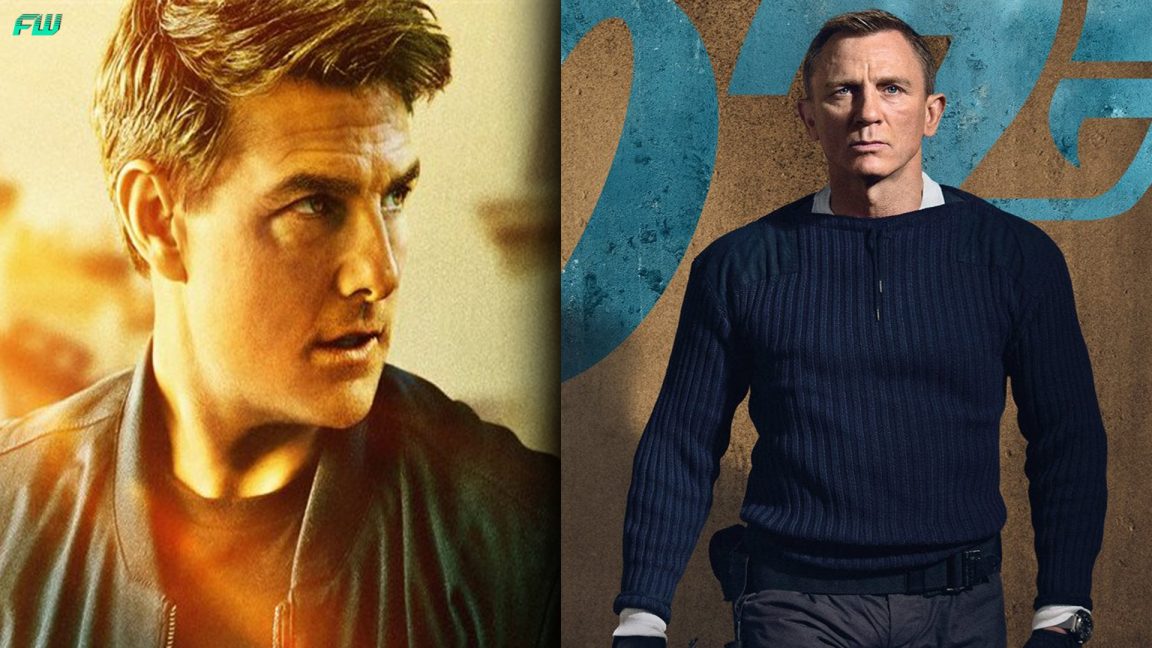
I'm not the only one who's thought about the "Mission: Impossible" movies versus the James Bond ones. Here's one site that does the "on the one hand...on the other hand" approach.

Well, I'm not going to do that. In fact, I'm going to boil this down to just a single point (although I think there are many reasons to support my conclusion): the "M:I" series is better because the weakest movie in that franchise -- which is universally thought to be "Mission: Impossible 2" -- is better than at least half of the Bond flicks (in my opinion, of course).

Let's start with "M:I 2." The basic plot is derivative of the Cary Grant/Ingrid Bergman movie "Notorious," where Cary Grant has to send his lover Ingrid Bergman as a honeypot against Claude Rains. Here, Tom Cruise's superspy Ethan Hunt has to recruit Thadiwe Newton's thief Nyah Nordhoff-Hall to gain information about her former lover's (played by Dougray Scott) nefarious plans involving a mysterious substance or item known as Chimera. The wrinkle is that during the recruiting process, Hunt and Nordhoff-Hall have fallen in love.

Hong Kong auteur John Woo directed "M:I 2," and so we have his signature action scene: Tom Cruise flying through the air, gun blazing in each hand. There's definitely some tonal whiplash from the first "M;I" movie, where Cruise was daring and acrobatic, and handy with a gun, but not the devastating one-man wrecking force here. On the other hand, as much of a muscular presence as Cruise presents, this movie doesn't have any of the insane stunt set-pieces that started with "Mission: Impossible - Ghost Protocol" and that have come to define the franchise.
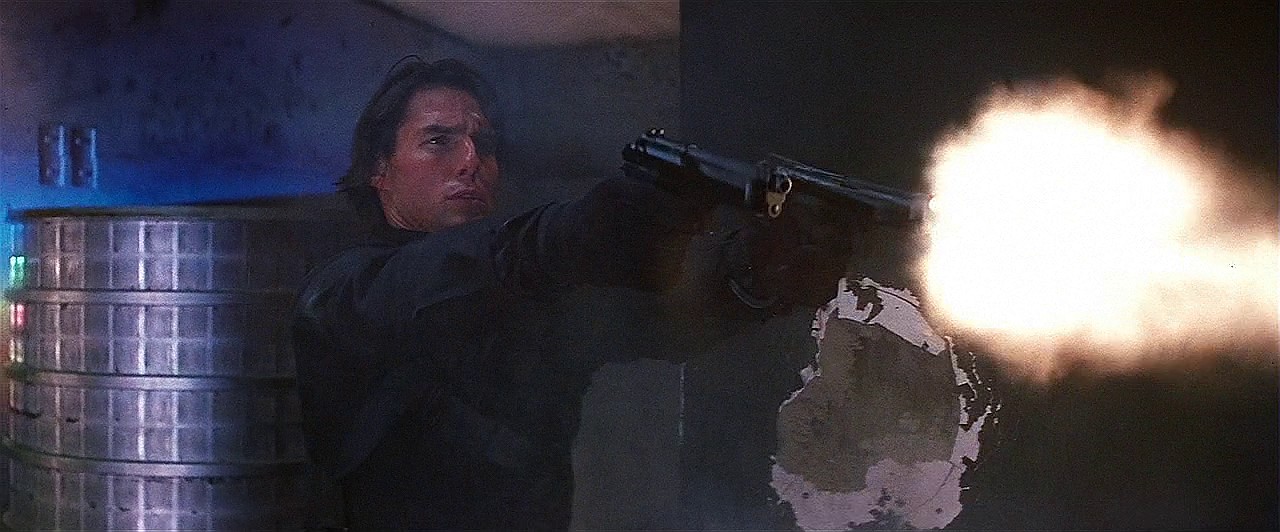


Nevertheless, it's still clearly a "M:I" movie. We have the self-destructing mission message, the face masks, the IMF team (though this is the least ensemble of all of the movies), and the plot twists. Indeed, on my current rewatch, I'm having trouble understanding why this movie isn't more popular. Even if it is the weakest of the "M:I" movies, it's still really good. It has a coherent plot (which is more than can be said for a lot of the Bond movies -- looking especially at you, "Skyfall"), a capable villain (cf. Max Zorin in "A View to a Kill"), and a female lead with agency (Nordhoff-Hall makes a crucial move on her own that saves Ethan Hunt and temporarily stymies the villain).

It's like saying that season 6 was the weakest season of "24" - true, but it was still better than almost anything else on TV at the time.

Again, this is my opinion, but taking into account plot coherence, technical filmmaking craft, acting, action set-pieces, and strength of other characters, I'd rather rewatch "M:I 2" than the following Bond movies:

"Dr. No" - yes, it started things off, but it's kind of boring

"From Russia with Love" - I'll grant that this is a really good movie, and my preference may be dictated by changing tastes over 40 years, so I won't argue that "M:I 2" is better

"On Her Majesty's Secret Service" - oh, what could have been with a better actor as Bond, but as is, terribly flawed

"Diamonds Are Forever" - this really has not aged well (which isn't entirely its fault), but among other things, compare how female lead Tiffany Case devolves into another helpless bikini-clad victim waiting to be rescued, to Nordhoff-Hall

"The Man with the Golden Gun" - just no, another one with an annoying female lead

"Moonraker" - apart from Jaws, this is pretty awful

"For Your Eyes Only" - my recollection is this was pretty good, but the scenes with the ice skater are pretty cringeworthy

"Octopussy" - I actually like this one, but c'mon, it's not better than "M:I 2"

"A View to a Kill" - Roger Moore should have quit a few movies earlier, or gone on Tom Cruise's regime (compare Moore in this movie to Cruise in "Mission: Impossible - Fallout"; they're close to the same age); he's so low-energy, and let's not get started about how bad Tanya Roberts' character was

"The Living Daylights" - ah, trying to make Bond something he's not, and what do end up with? a dour, uptight performance by Timothy Dalton (that fight hanging from the cargo netting out the back of the plane was pretty cool, though)

"License to Kill" - revenge-minded & rogue Bond...not bad, but nothing special

"The World is Not Enough" - admirable attempt at trying something new, but even though Pierce Brosnan is my favorite Bond actor, I've never felt the urge to watch this again

"Die Another Day" - okay, another one I'll confess to liking, but this is usually considered among the worst of the Bond movies, and I don't think anyone is going to be arguing this is better than "M:I 2"

"Skyfall" - I blogged at length about what was terrible about this movie. Now, this is the only of the Daniel Craig movies I've watched, but from what I've read, "Quantum of Solace" and "Spectre" are even worse...

That's somewhere around 12-14 movies (depending on how generous I'm going to be) out of 25 (not counting the "Casino Royale" parody and "Never Say Never Again") that I would rank as inferior to "Mission: Impossible 2." If the weakest "Mission: Impossible" movie is better than at least half of the Bond movies, and the three most recent "Mission: Impossible" movies are (again, in my opinion) better than every Bond movie, it's easy to see why I think one franchise is clearly superior to the other.
Thursday, March 2, 2023

"Star Trek: Discovery" to stop discovering after season 5


"Star Trek: Discovery" is ending after season 5, Entertainment Weekly reports. That's too bad. I'm a season behind since I don't subscribe to Paramount+ and have to wait for the blu-ray discs to reach my local library and work through the waitlist. However, I've really liked "Discovery," and it ranks as my second favorite Trek series -- behind, of course, Deep Space Nine.*

Yes, Discovery is more like the reboot movies than the Deep Space Nine or Next Generation, but I like the greater emphasis on action. What I really like, though, is the serialized nature of the show, which allows much greater character development and deeper storylines. And season 1 had amazing twists, some of which were jaw-dropping, and others of which were foreshadowed so that when they dropped, it was satisfying confirmation of what I suspected was the case.

Plus, it's got Michelle Yeoh...with a sword, no less!

* My current ranking: 

(1) Deep Space Nine: has the best overall cast of characters, intense serialization starting from the end of season 3, the funniest episodes of all the series, the most thrilling episodes of all the series, and the most interestingly philosophical episodes.

(2) Discovery: serialized, great acting especially by Michelle Yeoh, Jason Isaacs, and Sonequa Martin-Green.

(3) Next Gen: discounting seasons 1 and 2, which largely sucked

(4) Picard: I've only watched season 1

(5) Original Series: if forced to rank, I'd put it here, but it really is by itself in some many different ways

(6) Voyager: big drop-off; I think I watched all seven seasons, but it was pretty bad, and it had so much potential; basically, it could have been something like Battlestar Galactica

(7) Enterprise: I gave up after four episodes.

Incomplete (I haven't watched): Strange New Worlds, Lower Decks, Prodigy. Based on what I saw of the Pike, Spock, etc. characters on Discovery, I'd guess that Strange New Worlds would slot somewhere around 4-6, bumping Voyager and Enterprise down for sure, and maybe Picard and the original series.


Saturday, February 18, 2023

Physics and the MCU's Ant-Man


 I've enjoyed the two Ant-Man movies (and his appearances in "Captain America: Civil War" and "Avengers: Endgame"), but I just do not understand the physics of his size transformations -- or those of his partner, the Wasp.

Through the use of Pym particles, Scott Lang (Paul Rudd) can shrink to insect-size or expand to as tall as 60 feet. When he shrinks, he can ride on flying insects, but somehow he retains enough mass that when he rams into a person, he delivers quite a punch. I don't understand how both of these can be true. Either his shrinking is in dimensions (height, width, girth) only, meaning basically the atoms in his body move closer together; or his mass somehow changes, perhaps because 99 out of 100 atoms disappear.

The dimensional shrinking is the explanation given in the 1966 sci-fi thriller Fantastic Voyage (one of the recently passed Raquel Welch's first big roles), where a submarine and specialized crew are shrunk to the size of a bacteria so that they can navigate the blood vessels of a defecting scientist to repair a dangerous blood clot near the brain that can't be reached by other means. (Yeah, the dimensional shrinking didn't make sense there either, since the mass of a submarine being injected into a person should collapse through the body to the ground.)

Ant-Man's tiny form seems consistent with this dimensional shrinking, though -- even though he's insect-sized, he packs a punch like a human still. But then, how can the flying insect carry him?

And worse yet, when he expands to Giant-Man, if he retained human mass, then he should have an approximate density of 1/1000 -- at 60 feet tall, he's approximately 10 times taller, so he's gaining 10 times in each of the three dimensions, leading to 1/1000. With such light density, he should blow over in the wind, and certainly not be able to deliver giant punches with authority.

I know, they are comic book movies, literally. I do enjoy them. I just don't get the physics.


Saturday, February 4, 2023

Another argument for why I think "Deep Space Nine" is the best Star Trek series

One of my controversial pop culture opinions is that "Deep Space Nine" is the best Star Trek series. Usually, it's the original series or "Next Generation" that tends to sit atop rankings of the various shows. I get that: the original kicked off 50+ years of the franchise, and there are iconic episodes and some of the even-numbered movies. Meanwhile, "Next Gen" added much better visual effects, the beginning of some continuing story threads and character arcs, and more subtle acting.

But consider this -- the funniest episode of the original series is generally thought to be "The Trouble with Tribbles," or maybe "A Piece of the Action" (the gangster episode). The "Deep Space Nine" sequel to "Tribbles" is "Trials and Tribble-ations," and ingeniously sends the DS9 crew back in time to keep a Klingon agent from changing the events in the original episode. It's even funnier than the original episode -- the attempt to explain the retconning of the way Klingons look is enough by itself:


However, as great as "Trials and Tribble-ations" is, it's not at all clear that it's the funniest "DS9" episode. It gets strong competition from the following episodes:

"The Magnificent Ferengi," remaking "The Magnificent Seven" with a ragtag group of Ferengi to rescue Quark's mom!:


"House of Quark," where Quark tries to explain financial shenanigans to the Klingons:


"Our Man Bashir," where Dr. Bashir's James Bond fantasy goes very wrong:


and "Take Me Out to the Holosuite," pitching the DS9 crew versus Vulcans in baseball:


 These episodes are funnier than anything in any of the other live-action series.*

* I haven't watched any of the animated series "Lower Decks," which I gather is a comedy, so I can't compare "DS9" to it.

 "DS9" isn't generally thought of as a funny show; it has the reputation for being the darkest of the Star Trek shows, and it excels in that regard. Yet, for a dark show, it also has the best comic episodes. It's like the Shohei Otani of Star Trek series.